
Tripod LED Work Light Buying Guide for Construction and Jobsite Lighting
A tripod LED work light solves a problem handheld lights cannot: it raises high-output lighting above the work area and spreads it evenly across a whole site.
For construction crews, the best tripod work light combines high lumen output, wide beam coverage, weather protection, stable positioning and fast setup.
For importers and distributors, additional factors decide commercial success: packing volume, transport weight, spare-part availability and whether the product survives real jobsite handling.
The most common buying mistake is to compare tripod lights only by lumens.
Height, light distribution and IP rating determine how those lumens behave on an actual site.
This guide explains how tripod LED work lights are used, which specifications matter, how much output different site tasks require, and what to confirm with a supplier before placing an order.
Explore the Healiolight Tripod LED Work Light category for the current product family.
What Is a Tripod LED Work Light?
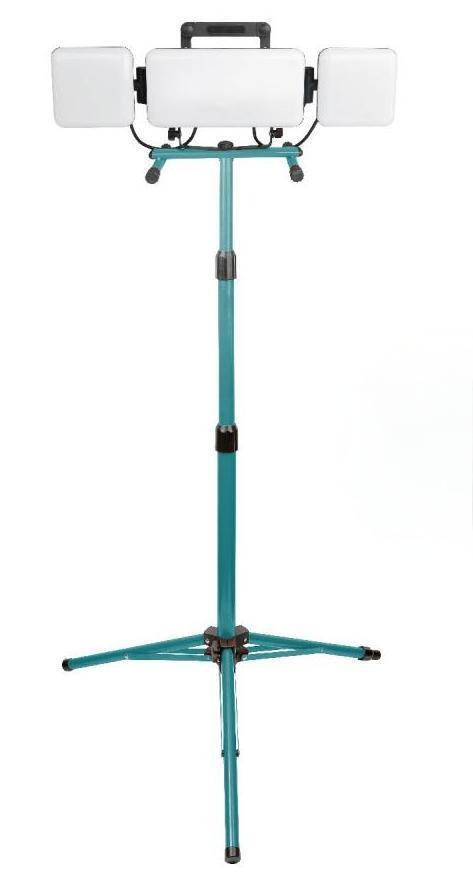
A tripod LED work light is a high-output LED luminaire mounted on a telescopic or fixed tripod stand.
The design does two things a handheld light cannot:
- It raises the light source. Positioned at height, the light throws over work zones instead of being blocked by materials, scaffolding and people;
- It frees both hands. Once the legs are set and the head is aimed, the crew works without holding or repositioning the light.
Typical LED tripod work lights combine one large main panel with additional side panels, wide beam angles for uniform coverage, and telescopic legs plus a rising column for height adjustment.
They are the standard jobsite tripod light — the area-lighting tool on construction sites, in renovation projects and wherever a large indoor or outdoor space must be lit from a portable unit.
The trade-offs are weight and bulk: a tripod light is carried, folded and transported, so mechanical design and packing matter as much as optics.
1. Where Tripod LED Work Lights Are Used
Construction and renovation sites
New builds and fit-outs rarely have permanent lighting.
A construction tripod light covers floor areas, stairwells and facades during drylining, plastering, painting and finishing.
Industrial maintenance and shutdowns
Plant shutdowns need temporary, high-output lighting in halls where ceiling fixtures are switched off — a portable tripod work light is placed, powered and removed within minutes.
Events, exhibitions and temporary installations
Set-up crews light halls, stages and outdoor tented areas before fixed systems are available, often after dark.
Warehouses, logistics and facility teams
Spot repairs, inventory checks and night shifts use one or two tripod lights to cover aisles without installing permanent fittings.
Infrastructure and outdoor works
Roadworks, utilities and site entrances after dark need raised, wide-coverage light with adequate weather protection.
In each of these settings, the buying priorities are the same: enough lumens, spread evenly, from a unit that stands safely and survives transport.
2. Tripod vs Handheld vs Fixed Work Lights
Tripod lights are one part of a lighting kit, not a replacement for everything else.
| Factor | Handheld / cordless work light | Tripod LED work light | Fixed temporary lighting |
|---|---|---|---|
| Light position | Task height, aimed by hand | Elevated on a stand, aimed once | Ceiling or structure mounted |
| Coverage | Task zone | Whole room or site zone | Building-wide |
| Output class | Hundreds to a few thousand lm | Multi-thousand lm (e.g., 11,000 lm class) | Highest, system-designed |
| Setup time | Instant | One to two minutes | Hours to install |
| Portability | Pocket or van | Folds for transport, bulkier | Not portable |
| Best for | Close inspection and repair | Area and whole-site illumination | Long-duration projects |
Use handheld lights for tasks and tripod lights for areas — the two categories complement each other.
Many distributors therefore stock both: compact cordless lights for task work and a high-output tripod unit at the top of the range.
See the Healiolight cordless LED work light range for the task-light side of the program.
3. How Much Output Does a Jobsite Need?
Lumens, lux and coverage
Lumens describe the total light a unit emits; lux describes how much of it actually arrives on the work surface.
The same 10,000 lumens produce very different working conditions depending on mounting height, beam angle and surface reflectance.
As a general orientation, commonly referenced industrial lighting levels are:
- roughly 150–300 lux for general movement and rough work;
- roughly 300–750 lux for detailed tasks such as finishing and inspection.
These are orientation values, not legal requirements; the exact level depends on the task, the standards that apply in your market and the site risk assessment.
Why raised, wide-beam light wins on site
A light at floor level creates a bright center, hard shadows and glare when the worker faces it.
The same output raised to head height on a tripod and spread through a wide beam — 160° is a typical design point — produces flatter, more uniform illumination with fewer shadows across the zone.
This is why output and height must be evaluated together:
A lower-output light at height can deliver better working conditions than a higher-output light on the floor.
Where the 11,000-lumen class fits
Units in the 11,000 lm class are designed to cover substantial floor areas — construction floors, halls, staging zones — from a single position.
They replace multiple smaller lamps, reduce cabling and trip hazards, and leave more outlet capacity for tools.
For smaller rooms or task zones, one or two compact cordless lights in the 1,600–5,000 lm range are usually the better tool; see the Healiolight cordless work light models for that output class.
4. Key Specifications to Evaluate
Height and reach
Telescopic stands adjust the light column — 1.5 m is a common working height for portable tripod units.
Higher mounting spreads light wider; lower mounting concentrates it.
Check that the height range is usable in practice: a light that extends to 1.5 m can be raised above typical material stacks and worker sightlines on a standard floor.
Light distribution: main panel and side lights
Modern tripod lights often combine a main panel with two side panels.
The Healiolight KCL22-ST, for example, pairs a 64W main light with two 32W side lights — 128W total — and offers four lighting modes: all lights, main light only, side lights only, and off.
This matters on site:
- All lights for maximum area coverage;
- Main light for a focused direction;
- Side lights for corridor-like zones or work between walls.
Multi-panel designs spread the same wattage more evenly than a single flat panel and reduce hard shadow edges behind equipment.
Beam angle
Wide beam angles — 160° on the KCL22-ST — suit area lighting because they minimize the bright-center/dark-corner effect.
Narrower patterns suit directional tasks; for site area lighting, prefer the widest distribution the structure allows.
IP rating for outdoor work
The IP code defines protection against dust and water.
IP65 means dust-tight and protected against water jets — the practical baseline for tripod lights that stand outside overnight or in weather-exposed zones.
An outdoor-rated tripod light is a different product from an indoor panel light; verify the rating in the specification table rather than trusting the word "waterproof" alone.
Power source and site power
High-output tripod lights in this class are powered from mains — the KCL22-ST runs on AC230V~50Hz.
Corded power is the logical choice for area lights: 128W drawn continuously for a full shift would demand battery capacity no portable pack can economically provide.
What to confirm with the supplier instead:
- plug type and cable specification for the destination market;
- cable length and strain relief;
- whether the unit is intended for use with site power distribution and RCD-protected circuits, as site rules in your market may require.
Color temperature and color rendering
Selectable color temperature — 3000K, 4000K, 5000K and 6500K on the KCL22-ST — lets crews match the light to the task and the environment: warmer tones indoors, daylight tones for detail and contrast work.
CRI above 80 supports fair color judgment in finishing, painting and electrical work.
Color consistency within SDCM 6 keeps multiple units on the same site from visibly differing in tint — noticeable the moment two tripods light the same room.
Materials, stability and transport
A tripod light is a mechanical product as much as an optical one:
- housing materials such as PC, aluminum and PA6 balance impact resistance, heat dissipation and weight;
- telescopic legs and a locking column keep the head stable at height;
- a folded profile and a carrying handle determine how easily crews move and store the unit;
- for distributors, the packing configuration controls freight cost — the KCL22-ST packs two units per master carton.
Ask for dimensions and weights per carton, not per unit — freight is calculated on the carton.
5. Healiolight Tripod LED Work Light Models
The Healiolight tripod work light range centers on the KCL22-ST-128W family, a two-model program built around one optical platform.
| Specification | KCL22-ST-128WH | KCL22-ST-128W |
|---|---|---|
| Total power | 128W (64W main + 2×32W side) | 128W (64W main + 2×32W side) |
| Max output | 11,000 lm | 11,000 lm |
| Light source | SMD2835 | SMD2835 |
| Voltage | AC230V~50Hz | AC230V~50Hz |
| Lighting modes | All / main / side / off | All / main / side / off |
| Beam angle | 160° | 160° |
| Color temperature | 3000K / 4000K / 5000K / 6500K | 3000K / 4000K / 5000K / 6500K |
| CRI (RA) | >80 | >80 |
| Color consistency | SDCM <6 | SDCM <6 |
| Ingress protection | IP65 | IP65 |
| Materials | PC+AL+PA6+Q197 | PC+AL+PA6 |
| Stand | Telescopic tripod, extends up to 1.5 m | Telescopic tripod, extends up to 1.5 m |
| Packing | 2 pcs / master carton | 2 pcs / master carton |
See the KCL22-ST-128 product page for the full specification table.
What distinguishes the KCL22-ST program
- 11,000 lm from one unit, replacing several smaller lamps on a typical floor;
- three-panel architecture (main + two side lights) with four lighting modes for flexible coverage;
- 160° wide-beam distribution for uniform, low-shadow area lighting;
- IP65 weather protection for overnight outdoor use;
- 4-step color temperature selectable on the light;
- telescopic tripod to 1.5 m with a folding design and telescoping carrying handle for transport;
- two units per master carton — a relevant figure for importers calculating landed cost.
The two models differ in construction details and finish — the 128WH specification additionally lists a Q197 material component; confirm the current configuration of each variant with the supplier when specifying.
Where it sits in a product program
A complete jobsite lighting program typically looks like this:
- compact cordless lights (1,600–5,000 lm) for task and room-scale work;
- an 11,000 lm tripod light for area and site coverage;
- optionally, socket-equipped models that add mains outlets for tools.
6. Setup Best Practices on Site
Getting full value from a tripod light is mostly about placement:
- Raise and spread. Set the head at working height and use the full beam angle rather than aiming at one spot;
- Overlap coverage. On larger floors, place units so beam edges overlap; this is what removes the mid-zone dimness;
- Watch the glare line. Position lights so workers are not looking directly into the panel; aim across the task, not into it;
- Use the modes. Run side lights only in corridors and between walls; save full output for open areas;
- Manage cables. Route cables away from walkways and protect them at crossings — site rules and local electrical requirements always take precedence;
- Respect the IP rating. IP65 protects against rain and jets, but the unit should still stand on stable ground and be secured on exposed sites.
None of this is complicated, and all of it is easier when the light itself has a stable stand, a wide beam and useful light modes.
7. Buyer Checklist for Importers and Distributors
Before ordering a tripod work light program, put these questions to the supplier:
- What is the exact IP rating, and is test documentation available?
- What is the lumen output, measured how, and at which color temperature?
- What are the lighting modes and the wattage of each panel?
- What is the telescopic height range and the locked-head stability at full height?
- What materials are used in housing, column and leg joints?
- What plug type, voltage and frequency variant (e.g., 230V/50Hz versus 120V/60Hz markets) and cable specification are fitted for the destination market?
- What are the carton dimensions, gross weight and units per carton?
- Which compliance documents are supplied, and which certificates does the destination market require?
- What is the packaging format — white box or color box — and can private-label packaging be supplied?
- What spare parts are available — lens, panel, column, leg locks?
- What warranty terms apply, and how are claims handled?
- Can samples be supplied before mass production?
Written answers to these twelve questions make quotations directly comparable and prevent most after-sales surprises.
8. Common Buying Mistakes
Buying on lumens alone
Eleven thousand poorly distributed lumens light a ceiling, not a site; distribution, height and modes decide the result.
Ignoring the IP rating
An indoor-rated light standing outside overnight is a warranty claim waiting to happen.
Overlooking stability
A tall light on an unstable stand in a busy corridor is a safety issue; check the leg design and locking.
Forgetting the cable
Plug type, cable length and strain relief differ by market; retrofitting these after import is expensive.
Ignoring carton volume
Tripod lights are bulky; two-per-carton packing versus one can materially change freight per unit.
Skipping the sample stage
Photographs do not show joint quality, diffuser uniformity or stand wobble — always test a production-intent sample.
Frequently Asked Questions
What is a tripod LED work light used for?
It provides elevated, wide-coverage area lighting on construction sites, renovation projects, industrial shutdowns, events and any large space without permanent lighting.
How many lumens does a construction site need?
It depends on area and task. An 11,000 lm-class tripod light covers a substantial floor zone from one position; smaller rooms and task work are served by 1,600–5,000 lm cordless or portable lights.
Why mount a work light on a tripod?
Height spreads light over obstacles and reduces shadows and glare, and the tripod frees both hands. Raised, wide-beam light produces more uniform working conditions than the same output on the floor.
Is IP65 enough for outdoor jobsite lighting?
IP65 is dust-tight and protected against water jets, which covers rain exposure for a standing unit. It is the common baseline for outdoor tripod work lights; always verify the rating in the specification, not the marketing text.
Can the light run on batteries?
High-output tripod lights in this class are mains-powered (AC230V for the KCL22-ST), because continuous 128W operation would exhaust portable batteries quickly. Battery power is practical for task lights, not area lights.
What does the main-light/side-light mode switch do?
It selects which panels run: all lights for maximum coverage, main only for a focused direction, side lights only for corridors and tight zones — useful for managing power and glare.
What should distributors check about packing?
Units per carton, carton dimensions and gross weight. The KCL22-ST packs two units per master carton, which directly affects freight cost per unit.
Why choose LED over halogen or fluorescent for site lighting?
LED panels convert more input power into usable light, reach full brightness instantly and run cool, so there is no hot glass surface near workers or materials — and no lamp to replace after transport vibration. For a portable unit that is carried, folded and redeployed daily, solid-state light sources also survive jobsite handling far better than filament or tube lamps.
How many tripod lights does a typical site need?
One 11,000 lm unit covers a substantial zone; larger floors use two or more units with overlapping beams so the edges of each coverage area meet without a dim band in between. Crews usually plan one unit per active work zone plus one shared spare, and add compact cordless lights for task detail.
How should tripod work lights be stored and transported?
Fold the tripod fully, retract the column and secure the head so the panels cannot swing. Transport the units in their cartons or a padded van partition, keep them dry, and store batteries (if the model uses any) and spare fuses separately. A folding profile and telescoping handle — as on the KCL22-ST — make daily van loading practical.
Which certifications are needed to sell tripod work lights?
Requirements differ by market — for example, CE-related documentation in the EU, voluntary schemes such as GS that support sales in Germany, and analogous schemes elsewhere. Request the applicable compliance documents from the supplier for your destination market before listing.
Final Buying Recommendation
When choosing a tripod LED work light, evaluate the product in this order:
Application → Output Class → Height → Beam Distribution → IP Rating → Power & Cable → Stability & Transport → Compliance
Output class and height determine coverage; IP rating and power determine where the light can actually be deployed; stability and packing determine your landed cost and after-sales risk.
For importers and distributors, the right tripod light is not the one with the highest number in the catalog.
It is the unit that covers your customers' typical site with fewer lamps, survives transport, packs efficiently and is backed by complete compliance documentation.
Looking for Tripod LED Work Lights for Your Market?
Healiolight is a professional work light supplier and OEM coordination partner offering tripod, cordless, rechargeable and socket-equipped work light families for construction, industrial and contractor-supply channels.
Review our 11,000 lm IP65 tripod work light and request distributor/OEM pricing.
Tell us your:
- destination market;
- target lumen range and coverage area;
- expected quantity;
- certification requirements;
- OEM requirements such as color, logo and packaging.
We can recommend suitable models and prepare a distributor or OEM quotation.
Primary CTA: Request an OEM Quote
Secondary CTA: View Healiolight Work Lights
 Tripod LED Work Light Buying Guide for Construction and Jobsite Lighting
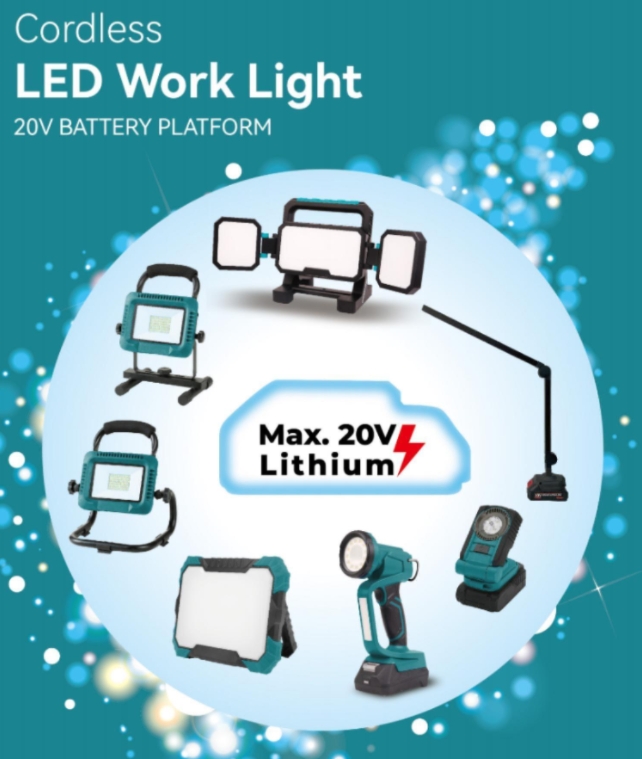 Cordless LED Work Lights: Complete Guide for Tool Brands and Professionals
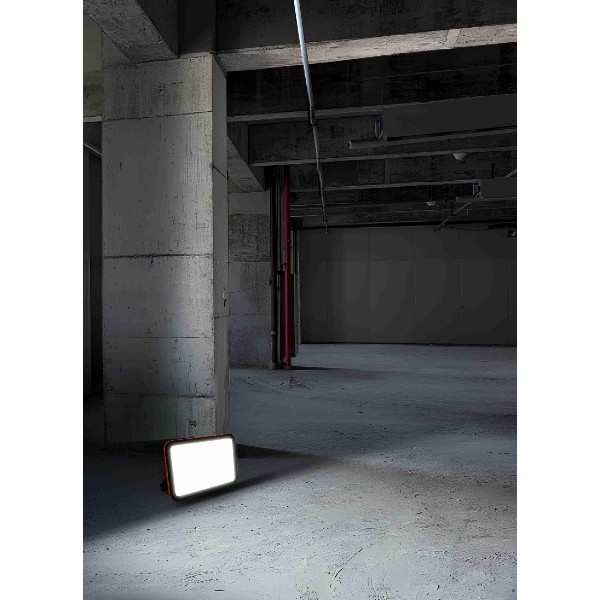 Rechargeable LED Work Light Buying Guide: Battery, Runtime, Lumens & Charging
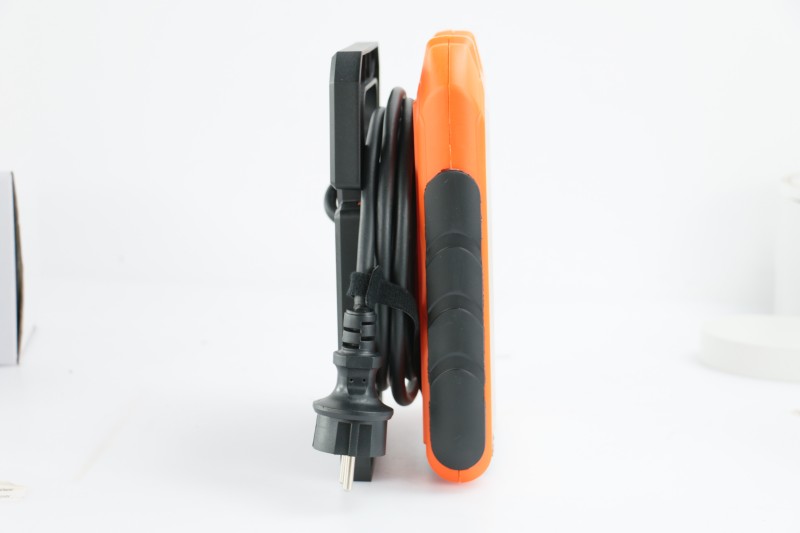 Ultimate Guide to LED Work Lights: Types, Lumens, IP Ratings & Buying Tips